
A New Focal Point at Museo Reina Sofía
Sancal’s relationship with the art world is deeply rooted in the company’s identity and in its way of engaging with the world. Beyond its ongoing collaborations with designers, the brand has long championed projects that explore the boundaries between the artistic and the functional, embracing an approach that is open, occasionally critical, and always connected to the cultural landscape of the moment.
That is why, when Jorge Penadés approached Sancal while working on the design of the new Welcome Lounge on the fourth floor of Museo Reina Sofía, the proposal immediately caught the attention of Esther and Elena Castaño-López. It represented a unique opportunity to become part of one of Spain’s leading contemporary art institutions while creating something truly special together with Jorge and his team.
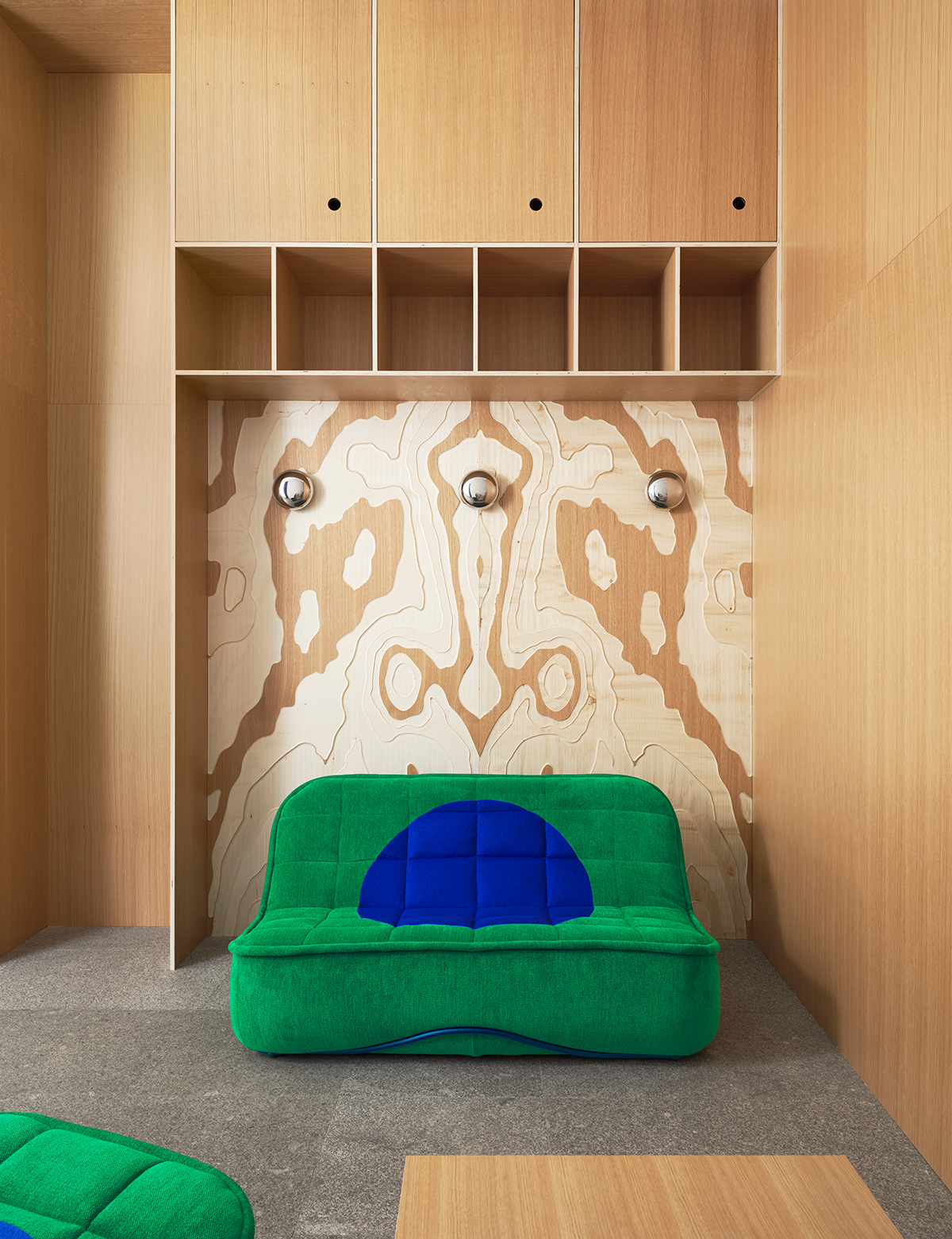
Jorge Penadés is responsible for designing this new welcoming space located on the fourth floor of the Sabatini Building, serving as a prelude to the museum’s permanent collection, Contemporary Art: 1975–Present, which explores the last fifty years of artistic production in Spain.
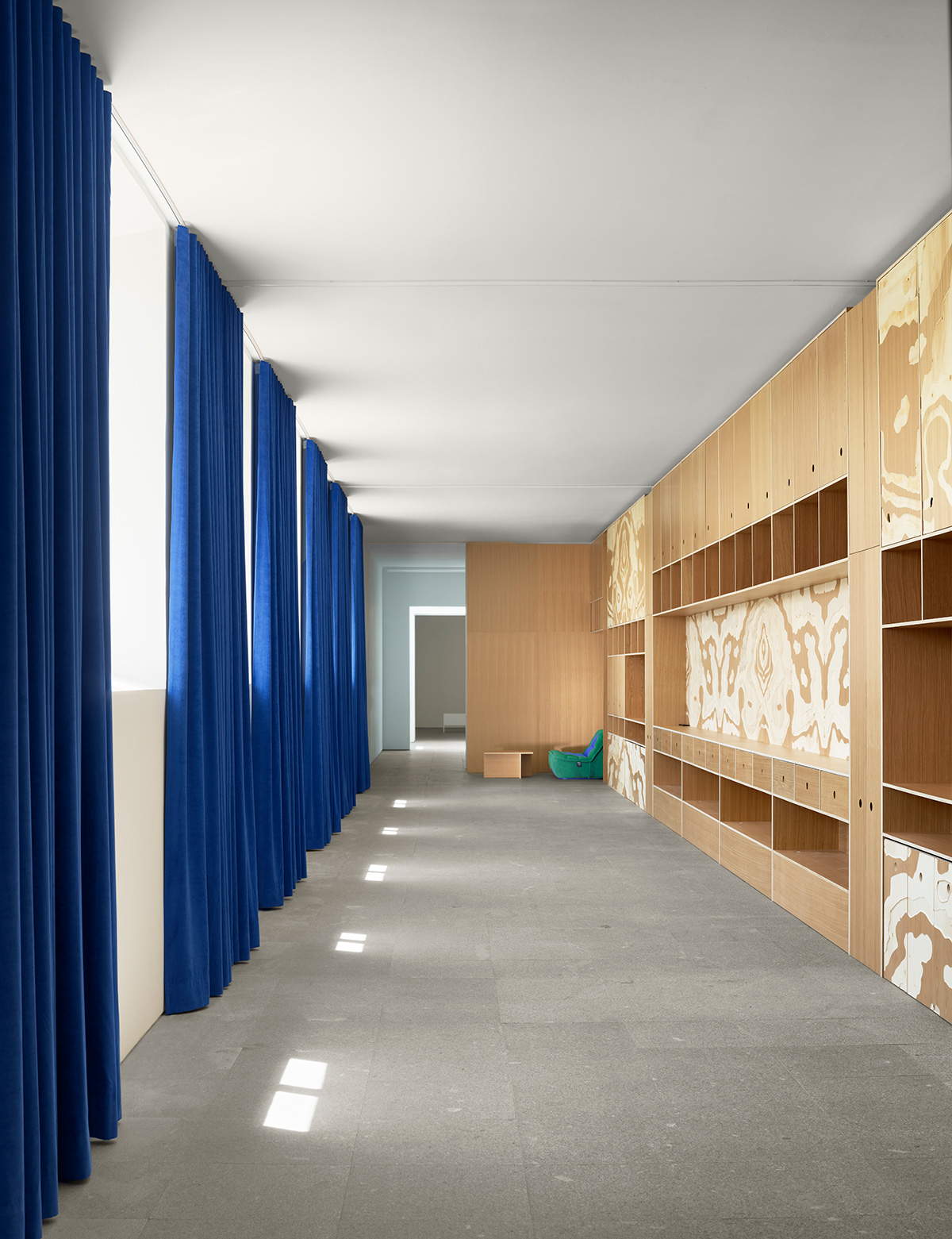
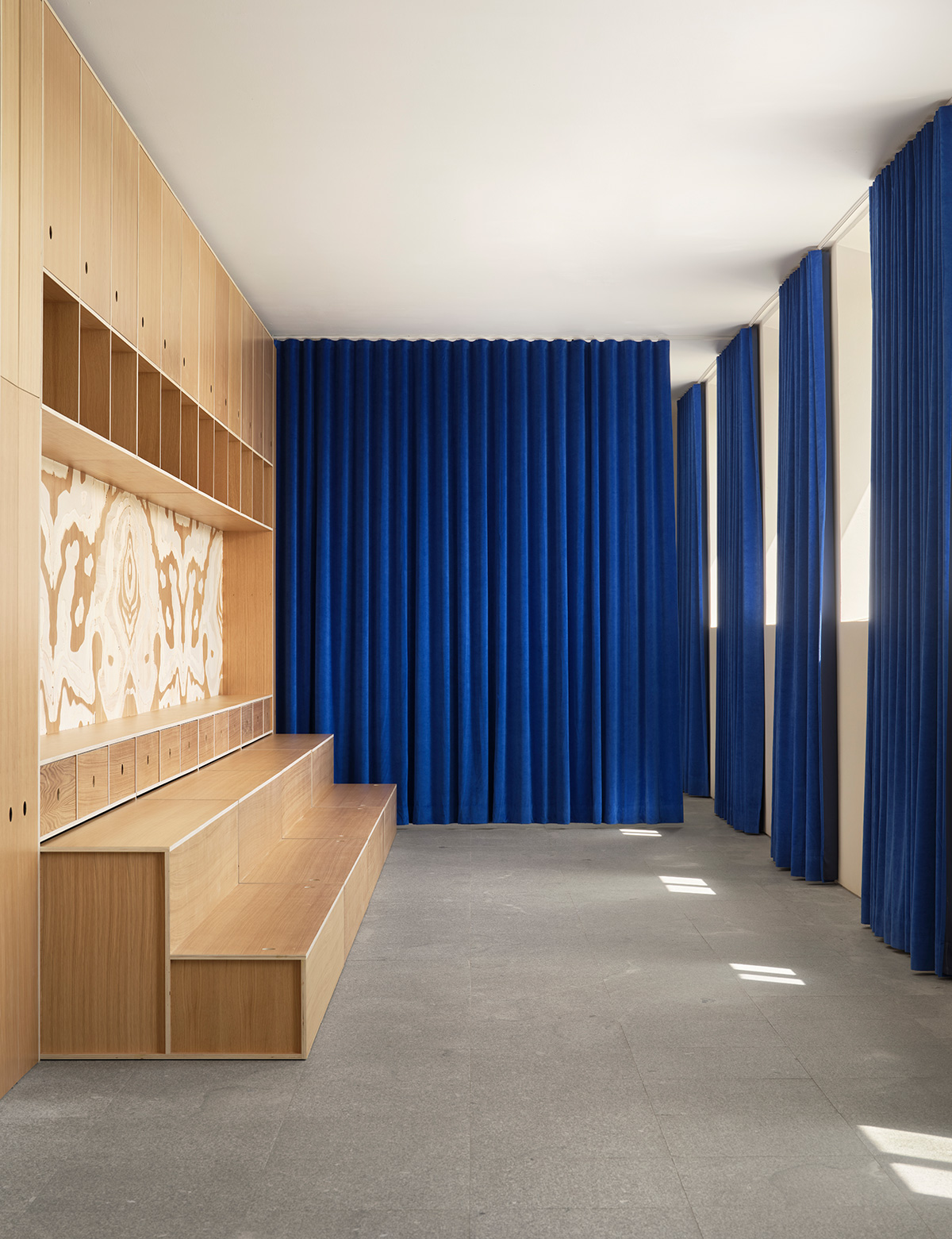
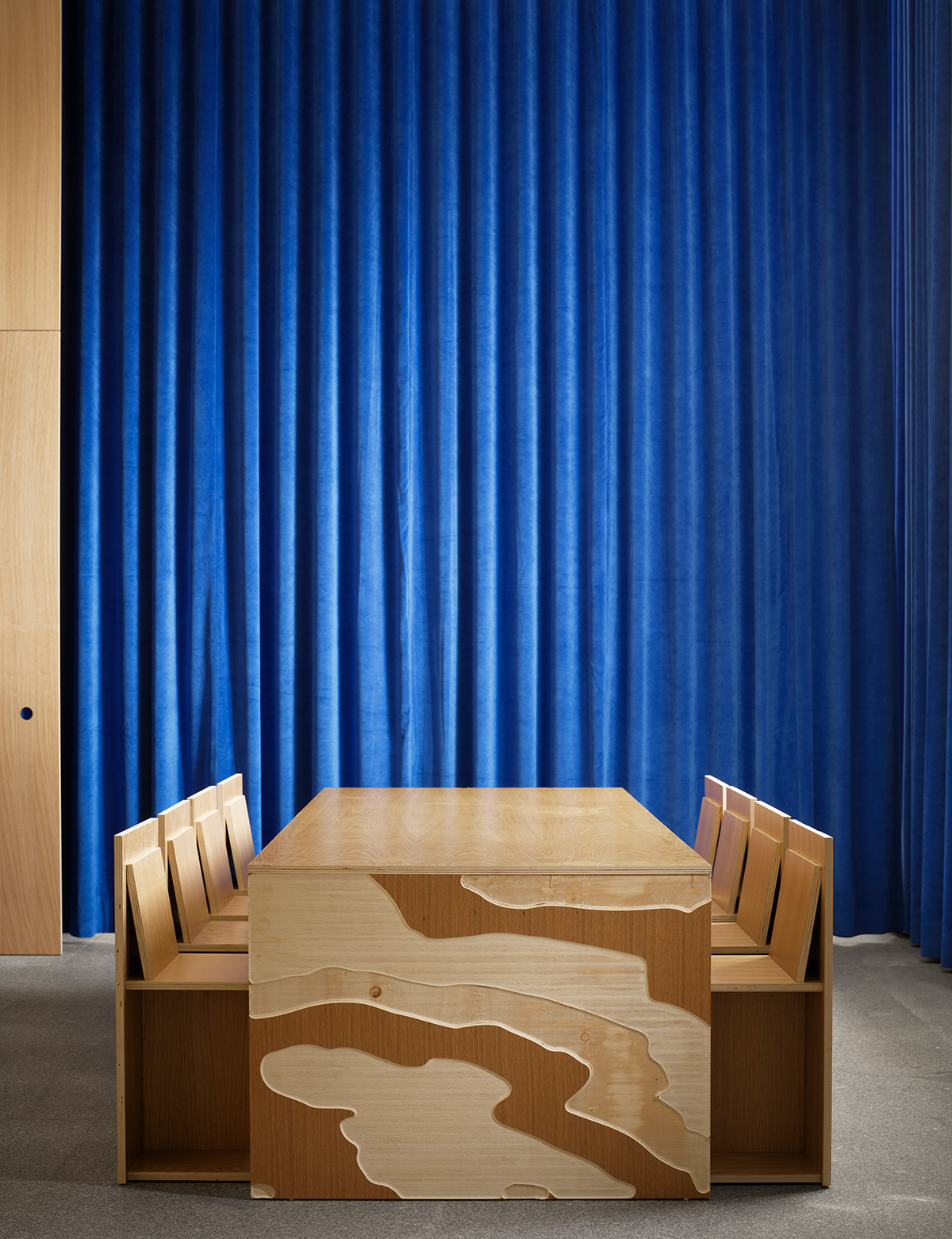
The concept behind Alhacena takes the Mediterranean kitchen as a model for coexistence, exchange and everyday life, shaping a flexible environment designed for gathering, learning and conversation. Penadés incorporates cabinets, shelving and seating that adapt to different users and activities, while establishing a dialogue with the history of the Sabatini Building through the use of wood as the project’s primary material. This approach references the building’s former laundry room and brings warmth to the space without competing with its existing architecture.
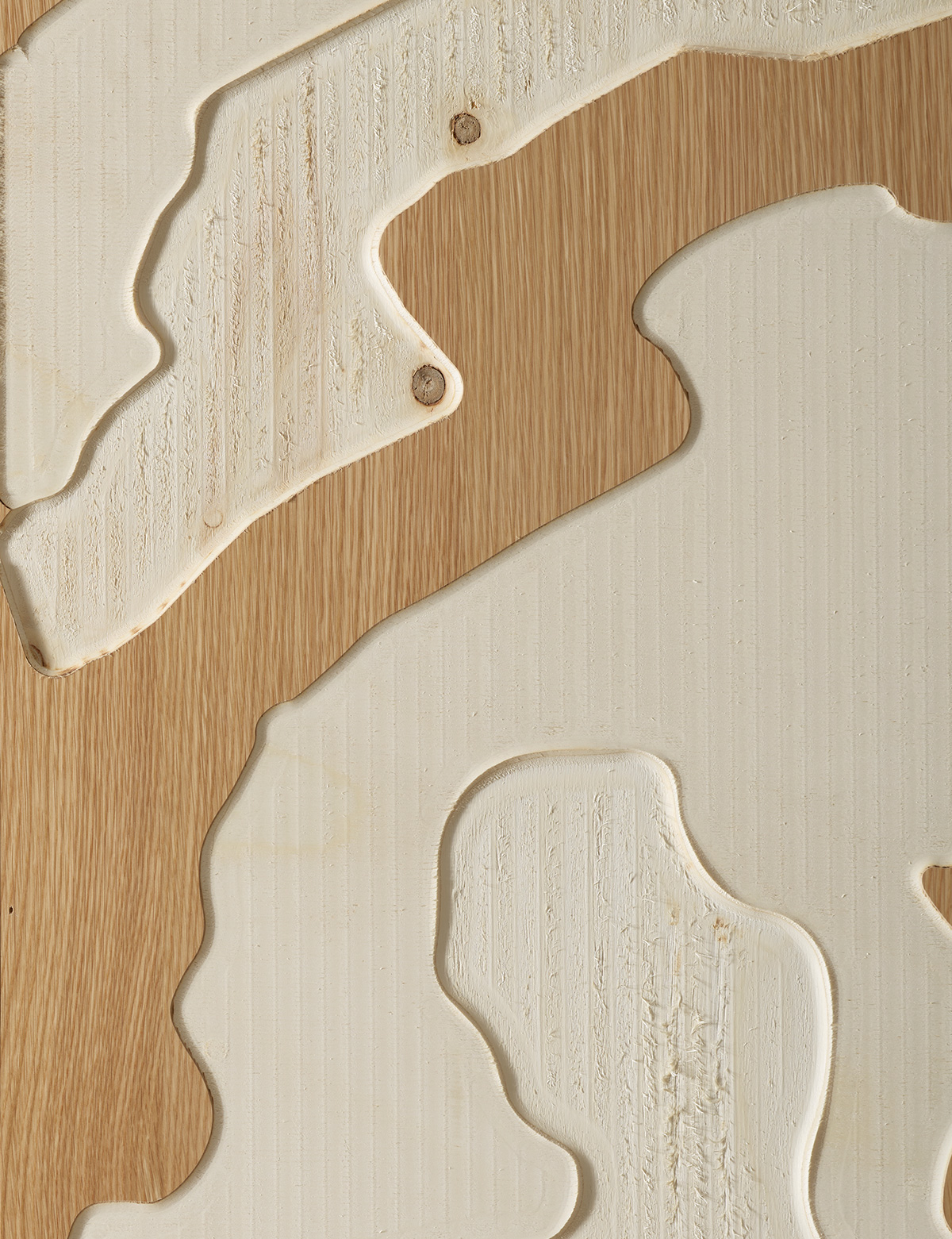
The project also embraces a sustainable approach through the use of surplus industrial timber, repurposed to create a 29-metre-long cabinet that gives these materials a second life within a cultural context. The intervention combines functionality, memory and circular economy principles within the framework of Museo Reina Sofía.
A Very Special Collaboration
Far from being a conventional partnership, the project was developed through dialogue and experimentation. The designer visited Sancal’s facilities in Yecla and worked closely with Esther and Elena throughout the process. From the outset, both parties shared the ambition of creating something unique that would reflect the identities of both studios while responding to the functional needs of the space.
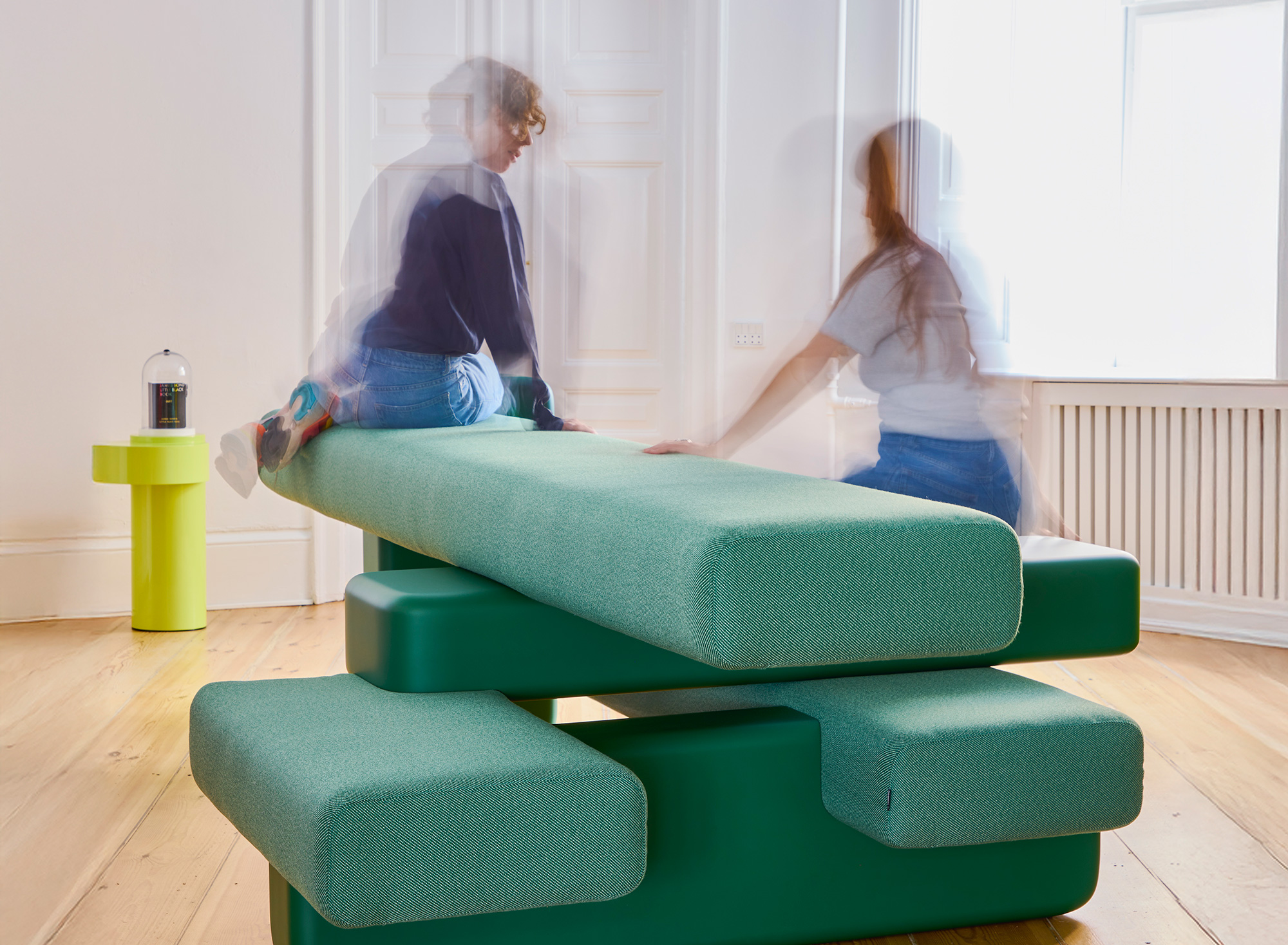
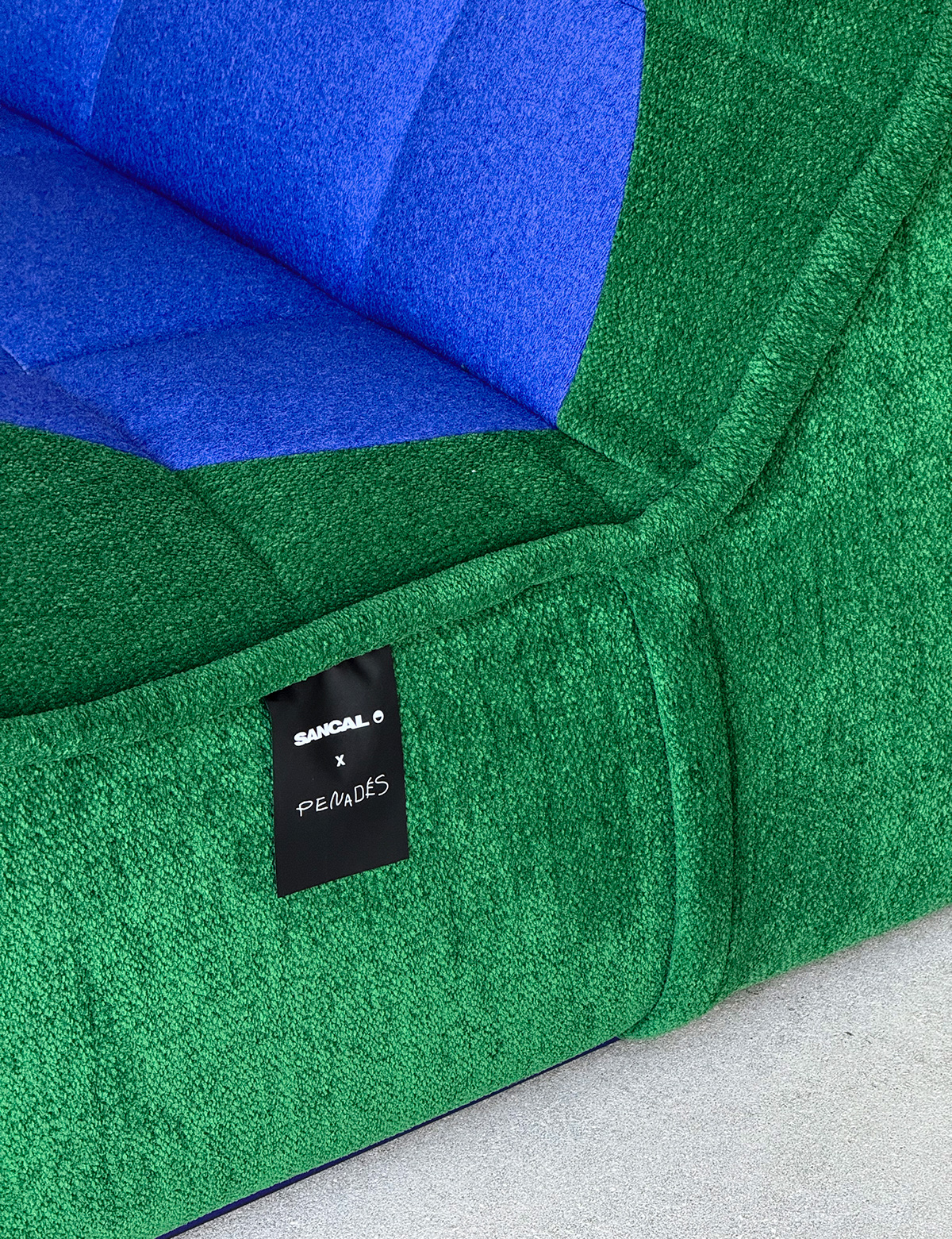
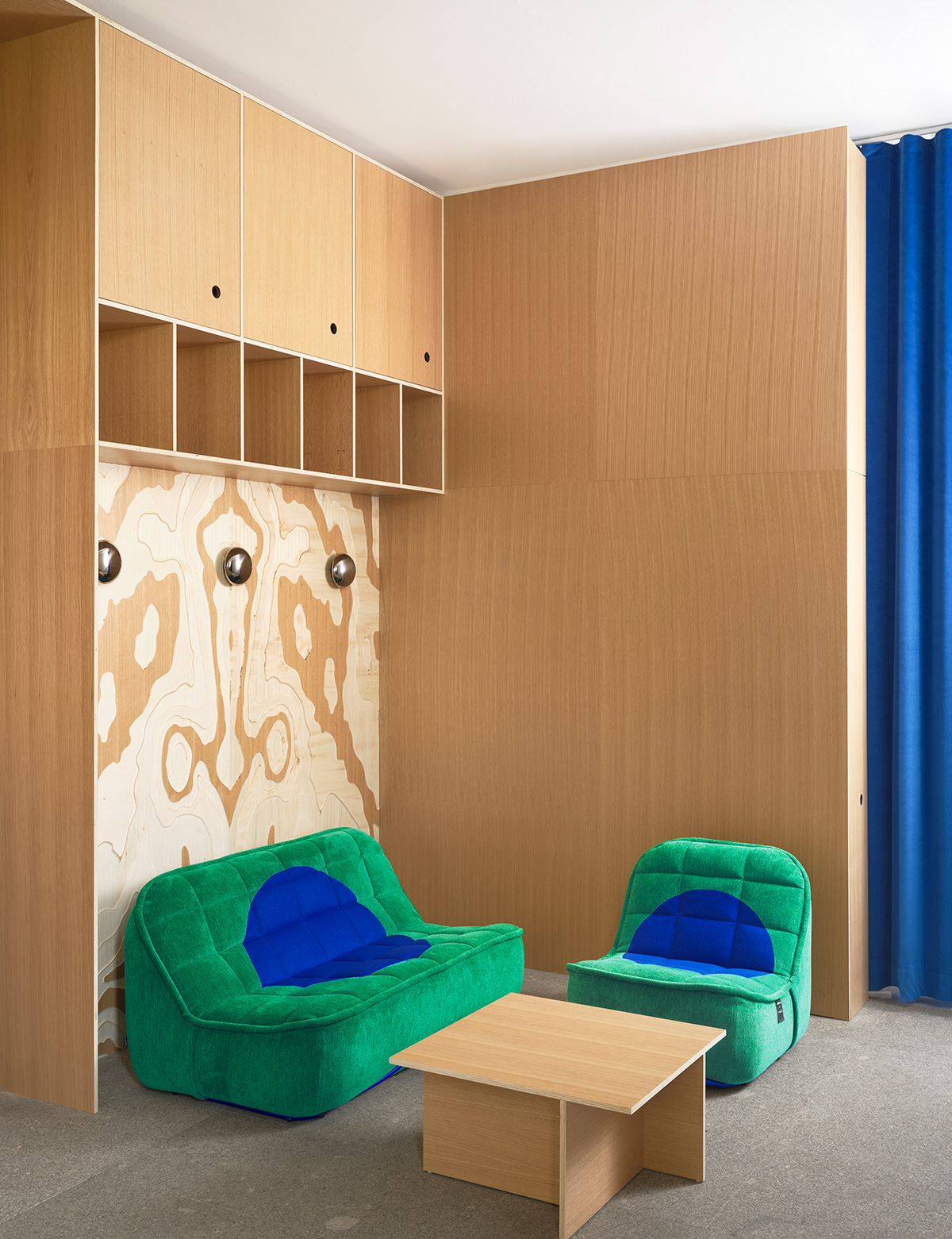
The collaboration resulted in an exclusive edition of the Vibe sofas and armchairs. Working with the design’s signature quilted slipcover, and choosing green as the primary colour, Jorge Penadés introduced a large Klein blue circle crafted using a patchwork-inspired technique.
The choice of Vibe was no coincidence. Designed by Estudio Sancal, the collection revives the welcoming spirit of the first modular systems developed by Santiago Castaño in the 1970s, reinterpreting that legacy through a contemporary lens. Its domestic character perfectly matched Penadés’ vision for the space, bringing a tactile and emotional dimension to the project.
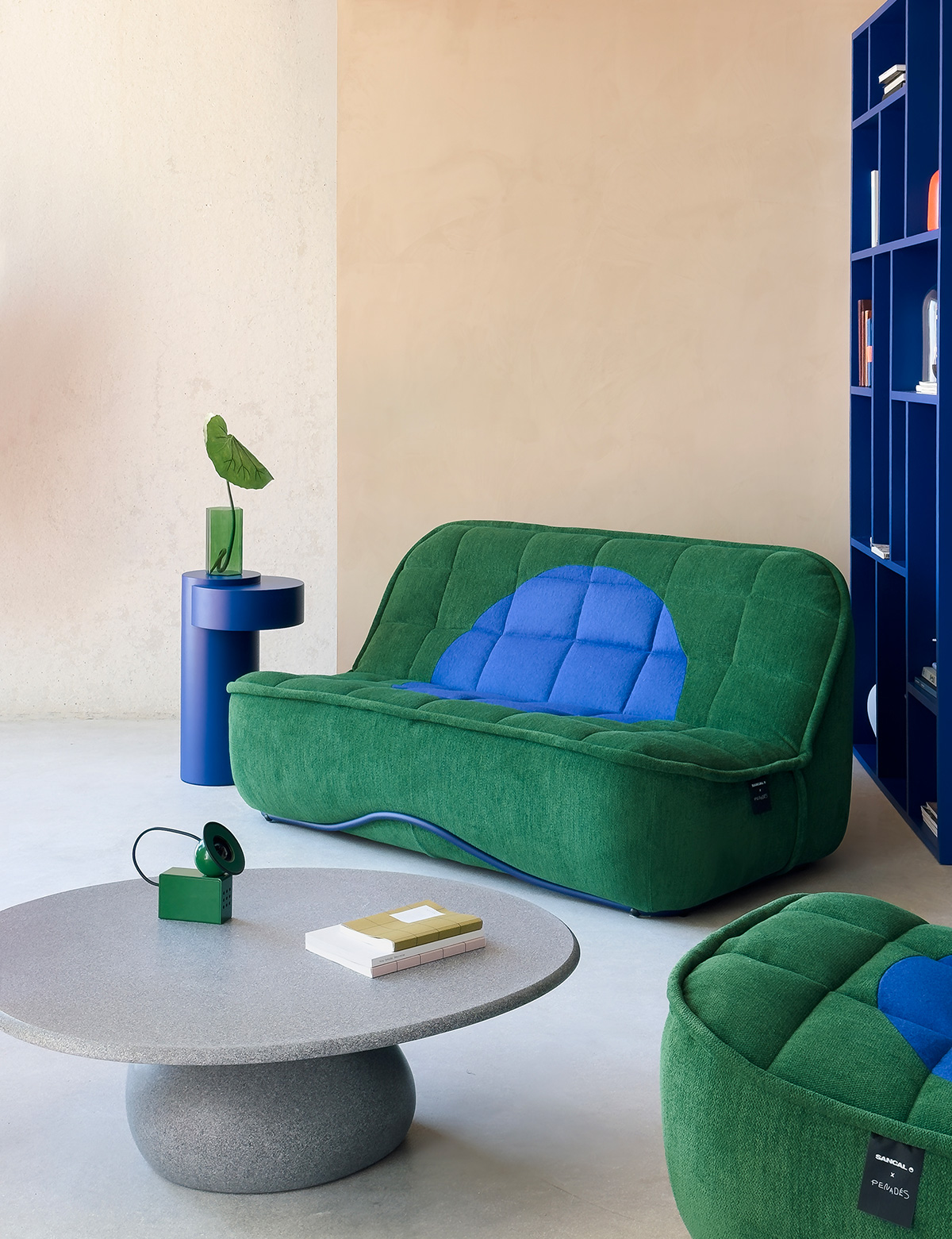
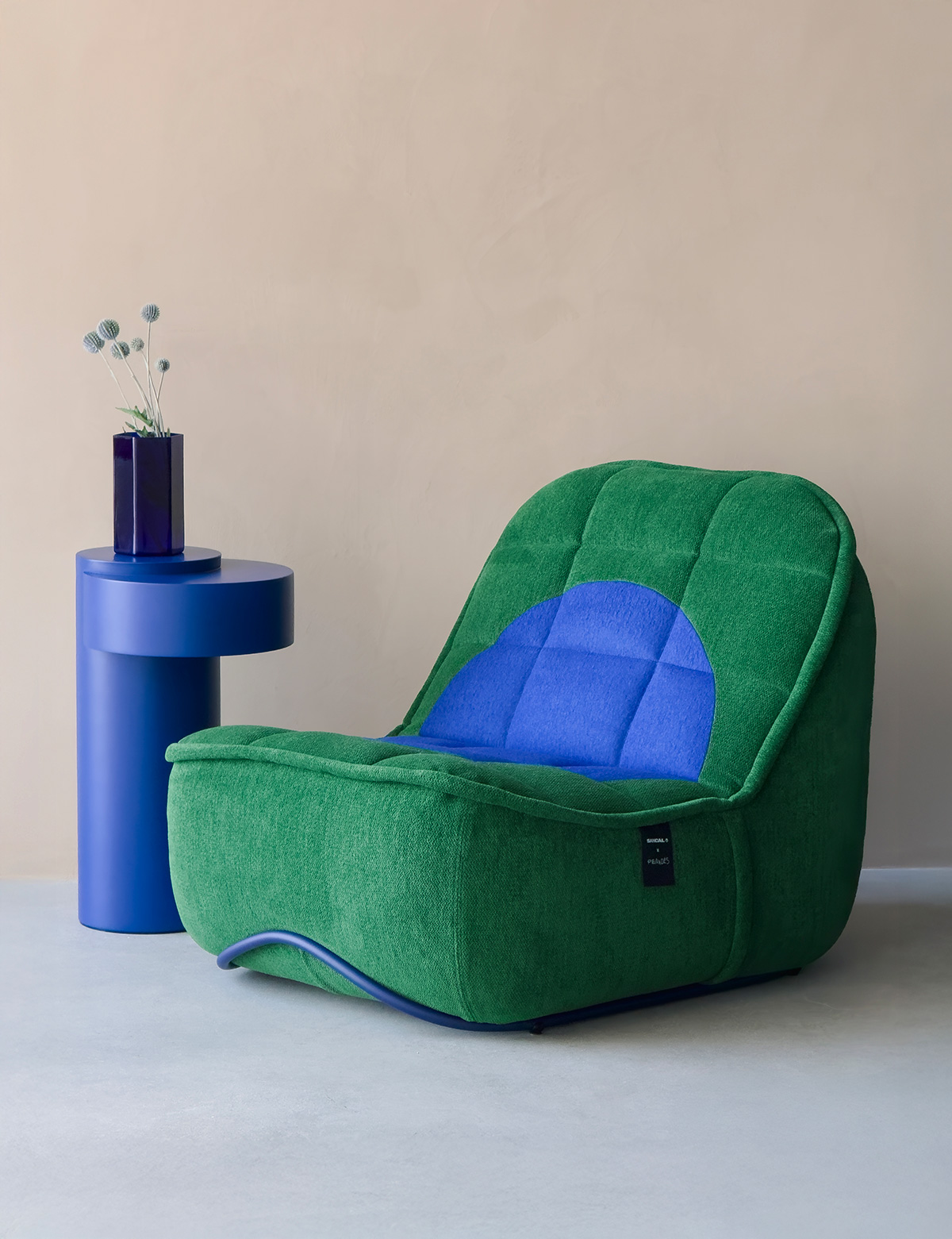
Penadés’ proposal transforms the Welcome Lounge into a place for gathering, resting and conversation, bringing a more human scale to the museum experience.
Together, Museo Nacional Centro de Arte Reina Sofía (MNCARS) and MANERA Magazine launched an open competition for the furnishing of the Welcome Lounge, in which Jorge Penadés’ proposal was selected from eighteen entries. The jury highlighted its research-driven and experimental character, rooted in material culture and contemporary design.
This project embodies a shared understanding of design as a cultural tool: a meeting point between a leading artistic institution, a designer deeply engaged with material research, and a company that continues to champion the dialogue between design, art and local production.
Contemporary Spanish Design Within the Collection
Alhacena also brings into the museum’s narrative a selection of materials, objects and pieces produced by some of the most representative companies in contemporary Spanish design, including Nanimarquina, Marset, Grupo Lamadrid and Garnica.
Photography by Germán Saiz.